Climate Matters
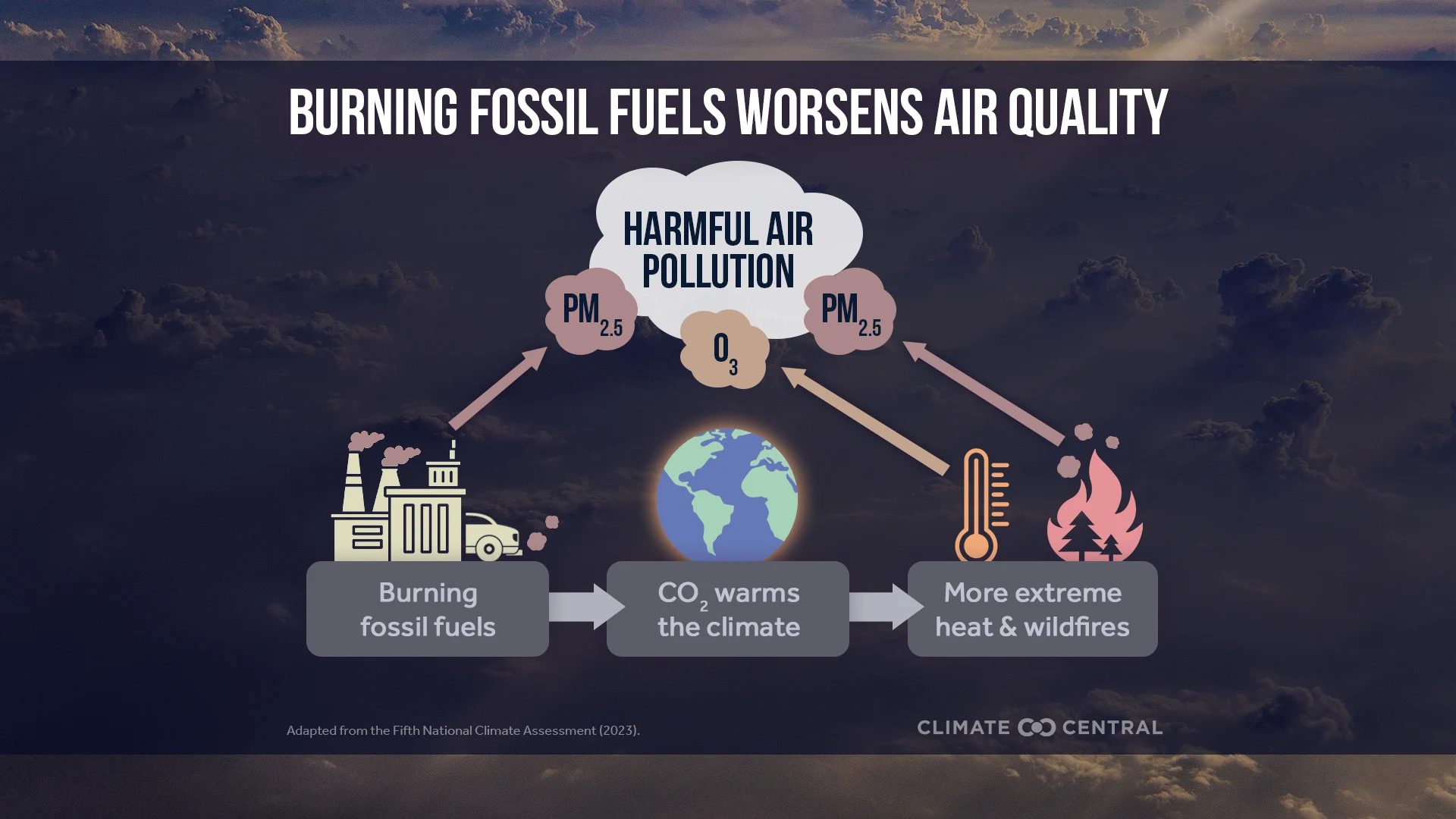
Burning Fossil Fuels Worsens Air Quality
Burning fossil fuels creates heat-trapping pollution as well as air pollutants, both of which can worsen air quality and put health at risk.

Human activities since the Industrial Revolution — mainly burning fossil fuels for energy, heating, transportation, and more — have caused a sharp rise in atmospheric greenhouse gas concentrations.
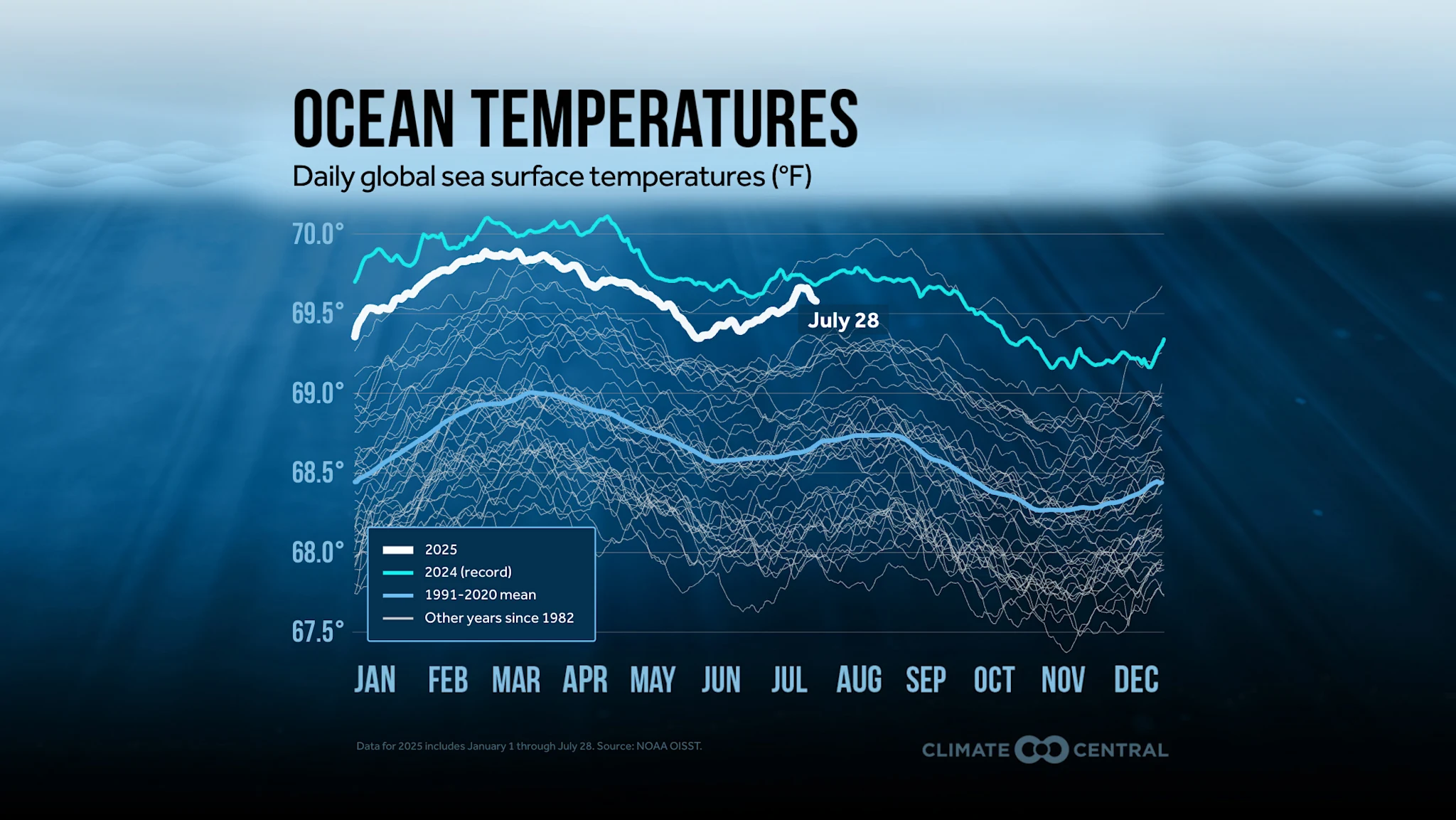
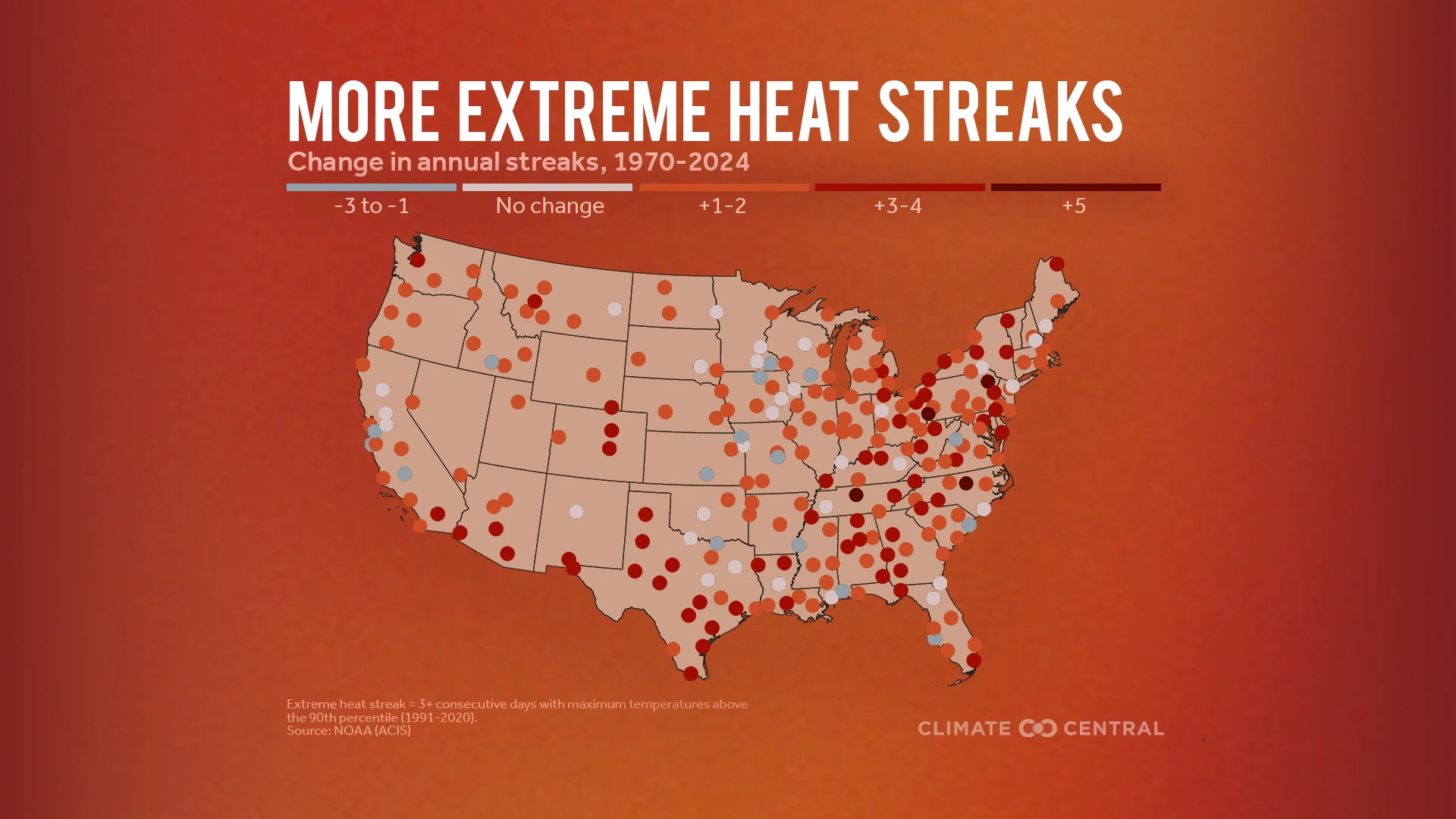
Rapid warming driven by this rise in greenhouse gas concentrations has led to many disruptive changes, including more frequent and intense extreme weather events across the U.S. and around the world.
Use and share Climate Central’s latest resources covering key facts about the causes and impacts of climate change, as well as ways to limit future warming.
Check out Climate Central’s Key Facts Slideshow
Check out Climate Central’s Attribution Science Explainer
Yes. Virtually all climate scientists (97%) agree that humans are causing climate change.
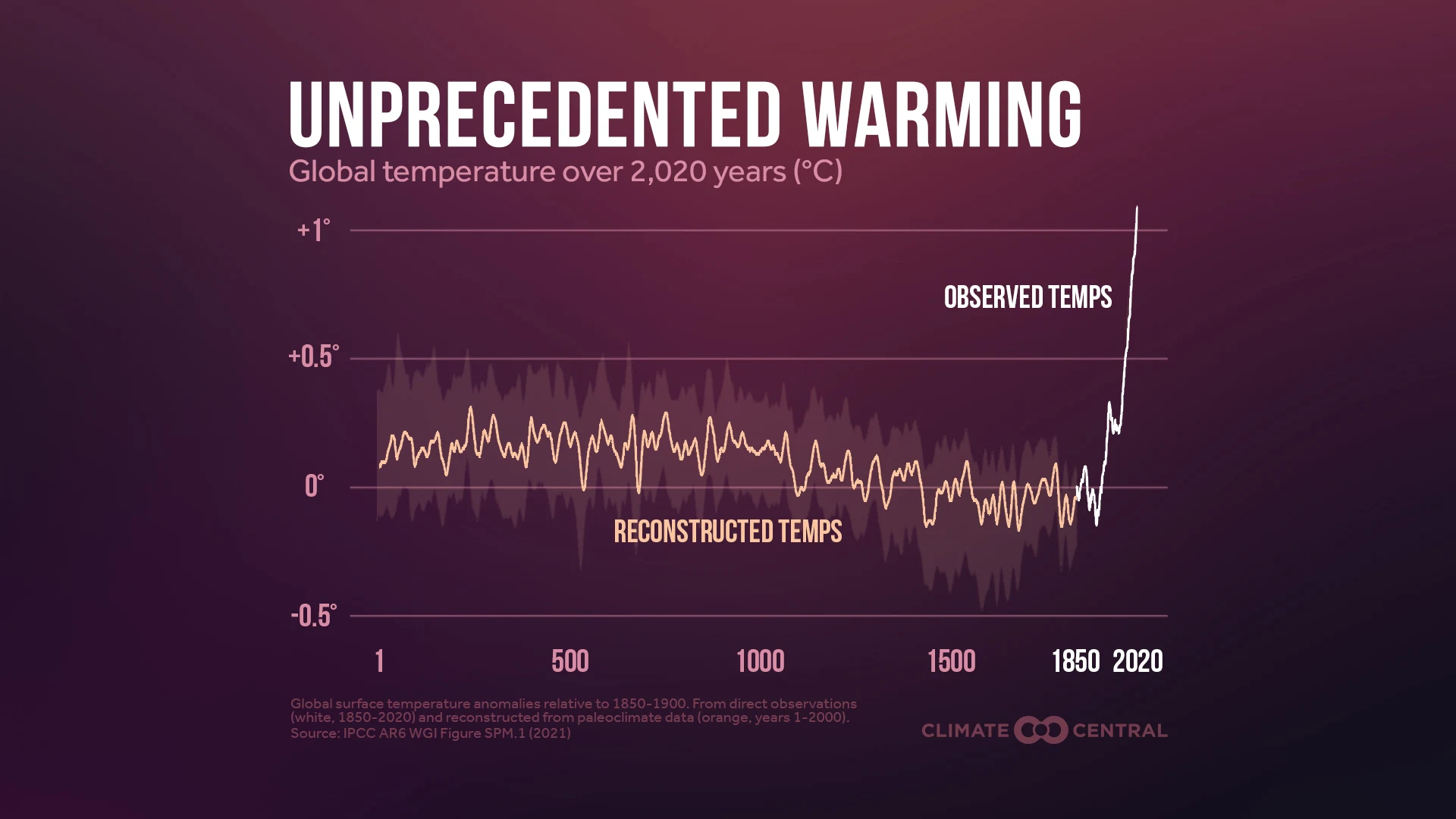
Yes, Earth has experienced many dramatic changes in climate, and especially temperature, over its long history. But recent warming is unprecedented in terms of its speed and magnitude, as well as its primary cause — humans burning fossil fuels (coal, oil, and methane gas). Excess heat trapped by greenhouse gases from burning fossil fuels is driving warming at rates not seen in at least the last 2,000 years. And present-day concentrations of carbon dioxide (CO2) and methane are far higher than at any point during at least the last 800,000 years.
Thanks to decades of scientific advancements, it’s now possible to measure the connection between climate change and certain weather events. Event attribution science measures how much more likely, frequent, or intense specific weather events are because of human-caused climate change.
Climate Central’s Climate Shift Index uses attribution science to quantify the influence of climate change on daily temperatures, daily sea surface temperatures, and hurricane wind speeds around the globe, every day.
In 2015, nearly every country in the world signed on to the landmark Paris Agreement to limit global warming and reduce the escalating risks to people, ecosystems, and economies. Signing countries committed to the goal of keeping “the increase in the global average temperature to well below 2°C above pre-industrial levels,” with an aim of keeping warming below 1.5°C.
Regardless of any threshold, every fraction of a degree of warming avoided means a relatively safer future. And exceeding this 1.5°C threshold would lead to a dangerous world, with risks mounting with additional warming.
An increase in global average temperatures of 1.5°C (2.7°F) above pre-industrial levels may not seem like much. This relatively small change in global average temperatures, however, has major impacts on the frequency and intensity of various climate extremes, including extreme heat — the deadliest weather-related hazard in the U.S.
Although the rate of increase in fossil fuel emissions has slowed globally, this is far from the rapid cuts that would be needed to stay within 1.5°C of warming. As of January 2026, the planet is projected to reach levels of carbon pollution that would cause global temperature increase to exceed 1.5°C in just 4 years at current emission levels.
Most people are concerned about climate change and want more action. In the U.S., 63% of adults are concerned about climate change. And a 2024 study shows that 89% of people around the globe want more climate action from national governments.
Despite these high levels of concern, most people also tend to underestimate how much others care about climate change.
This gap matters because when people perceive lower levels of public concern or support for climate action, they’re more likely to self-silence on the issue. And silence can perpetuate these misperceptions and stifle action.
There are many options to cut heat-trapping pollution from energy, transportation, buildings, agriculture, and more. These solutions include switching from electricity generated by fossil fuels to increasingly affordable renewable sources such as solar and wind power, increasing energy efficiency, and changing the ways that people and goods move around.
As the climate changes, there are also many ways to adapt to new conditions. Both cutting heat-trapping pollution and adaptation work toward a safer future — especially for younger generations.
Talking about climate change, including sharing the facts and the science, is also a key climate solution; this can help people understand how much others care about climate change, and increase broad public support for solutions.
All of these solutions contribute to ensuring a safer future for all people.